

TWAS and the TWAS Young Affiliates Network (TYAN) are joining forces to create new opportunities for learning, networking, and collaboration, with the aim of supporting the next generation of scientific leaders.
The TWAS-TYAN Joint Seminar Series is designed to provide a platform for addressing shared global challenges and fostering dialogue across borders and disciplines. By bringing together leading experts and emerging scientists, the initiative contributes to strengthen science diplomacy as a tool for international cooperation.
The first webinar will address science diplomacy, a vital approach needed for efforts to build along common interests across barriers, including regions and disciplines.
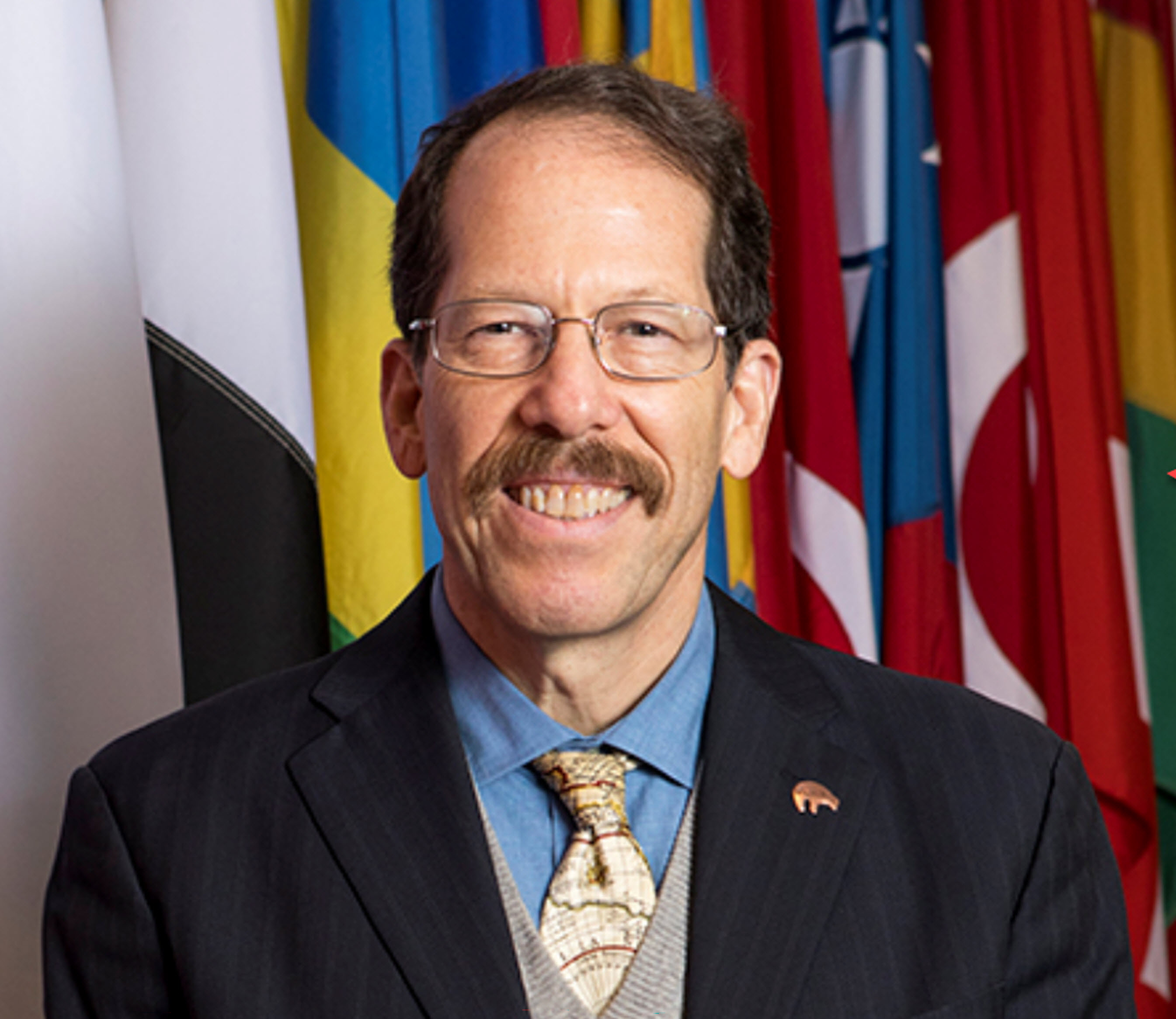
Titled ‘Science diplomacy: Building common interests with global inclusion’, the first TWAS-TYAN webinar will feature Prof. Paul Arthur Berkman and focus on science diplomacy, highlighting its role in building common interests and advancing collaborative solutions in an increasingly interconnected world.
The event will take place online via Zoom on 13 July at 3 PM CEST and will include a Q&A session. To participate in the webinar, register here.
Abstract
Science diplomacy: building common interests with global inclusion
Inclusion equates with knowledge discovery (who, what, when, where, why, and how), providing insights about patterns, trends, and processes to make informed decisions that operate across a continuum of urgencies. Inclusion is also a fundamental difficulty for humanity to overcome at personal to planetary levels, considering the immediate and enduring challenge of our globally interconnected civilization to navigate the 21st century.
Science diplomacy emerged at the height of the Cold War — in the aftermath of World War II last century — revealing a powerful path for dialogue even among superpower adversaries based on ‘matters of common interest’, which were elegantly elaborated in the 1959 Antarctic Treaty that became the first nuclear arms agreement.
“With the interests of science and the progress of all mankind”, the 1959 Antarctic Treaty emerged directly from the International Geophysical Year (IGY) 1957–1958, forever highlighting the global roles and inclusive responsibilities with science as a tool of diplomacy. This presentation will illustrate how science diplomacy works as a language of hope, applying the Global Indigenous Youth Summit on Climate Change (GIYSCC) as an inclusive, as well as inspiring exemplar with the theory, methods, and skills of informed decision-making.
GIYSCC is a “virtual dialogue by, for and among Indigenous youth with global inclusion” on August 9th — circling the Earth with the Sun across three 8-hour time zones in 24 hours (00:00-24:00 GMT) on the International Day of the World’s Indigenous Peoples. Considering inclusion and leadership in the context of this World Forum for Women in Science, the four GIYSCC Global Leads from 2023–2026 have all been amazing women leaders from Africa (Nigeria, Mauritius, Madagascar, and Ghana, respectively). Since its origin with GIYSCC–2023, this annual virtual dialogue has engaged registrants representing 355 languages from 140 nations.
Importantly, the GIYSCC Indigenous Youth Leaders have produced legacy contributions, notably their 2023 Nature Commentary that ‘Indigenous Youth Must Be at the Forefront of Climate Diplomacy’, initiating development of a Global Partnership of Indigenous Youth in the spirit of SDG 17 among the UN SDGs.
The ongoing passion, imagination, and capacities with the GIYSCC Indigenous Youth Leaders are further reflected by two upcoming Springer volumes in the Informed Decisionmaking for Sustainability book series — including nearly 50 chapters crafted by indigenous youth from around the world. Global inclusion with GIYSCC is hopeful for humanity with insights for the benefit of all on Earth across generations.
Who is Prof. Paul Arthur Berkman
Paul Arthur Berkman wintered in Antarctica on a SCUBA research expedition with the Scripps Institution of Oceanography in 1981. At age 23, he became a visiting professor at UCLA, where he began developing science diplomacy, later reflected in his textbook Science into Policy: Global Lessons from Antarctica (2002). In 2009, marking the 50th anniversary of the Antarctic Treaty, he convened and chaired the Antarctic Treaty Summit in Washington, D.C. The summit led to the publication of the first book on science diplomacy by the Smithsonian Institution, supported by more than 40 organizations worldwide, including the United Nations.
As a Fulbright Distinguished Scholar at the University of Cambridge in 2010, he co-directed the first formal dialogue between NATO and Russia on Arctic security, resulting in the widely downloaded book Environmental Security in the Arctic Ocean. In 2013, he warned in The New York Times of the need to prevent an ‘Arctic Cold War’ through common-interest building.
Prof. Berkman also co-convened the first international dialogues on science and technology advice in foreign ministries (2016–2017). His research spans oceanography, ecology, engineering, international law, data management, and science diplomacy. He coordinated multinational Arctic sustainability projects (2013–2022) and serves as senior editor of Springer’s Informed Decisionmaking for Sustainability series.
Since 2023, he has coordinated the Global Indigenous Youth Summit on Climate Change, engaging nearly 3,000 participants from 140 nations. The same year, he received a Guinness World Record for a 1981 Antarctic dive beneath the McMurdo Ice Shelf. He has received international awards for advancing science diplomacy and is happily married with two daughters.
About the TWAS-TYAN Joint Seminar Series
The TWAS–TYAN Joint Seminar Series brings together distinguished experts and emerging scientific leaders to explore how science can address the challenges of a fast-changing world.