



To explore the opportunities, challenges, and growing impact of Artificial Intelligence (AI) and Data Science worldwide, particularly in the global South, TWAS launched a monthly Distinguished Speaker Webinar Series.
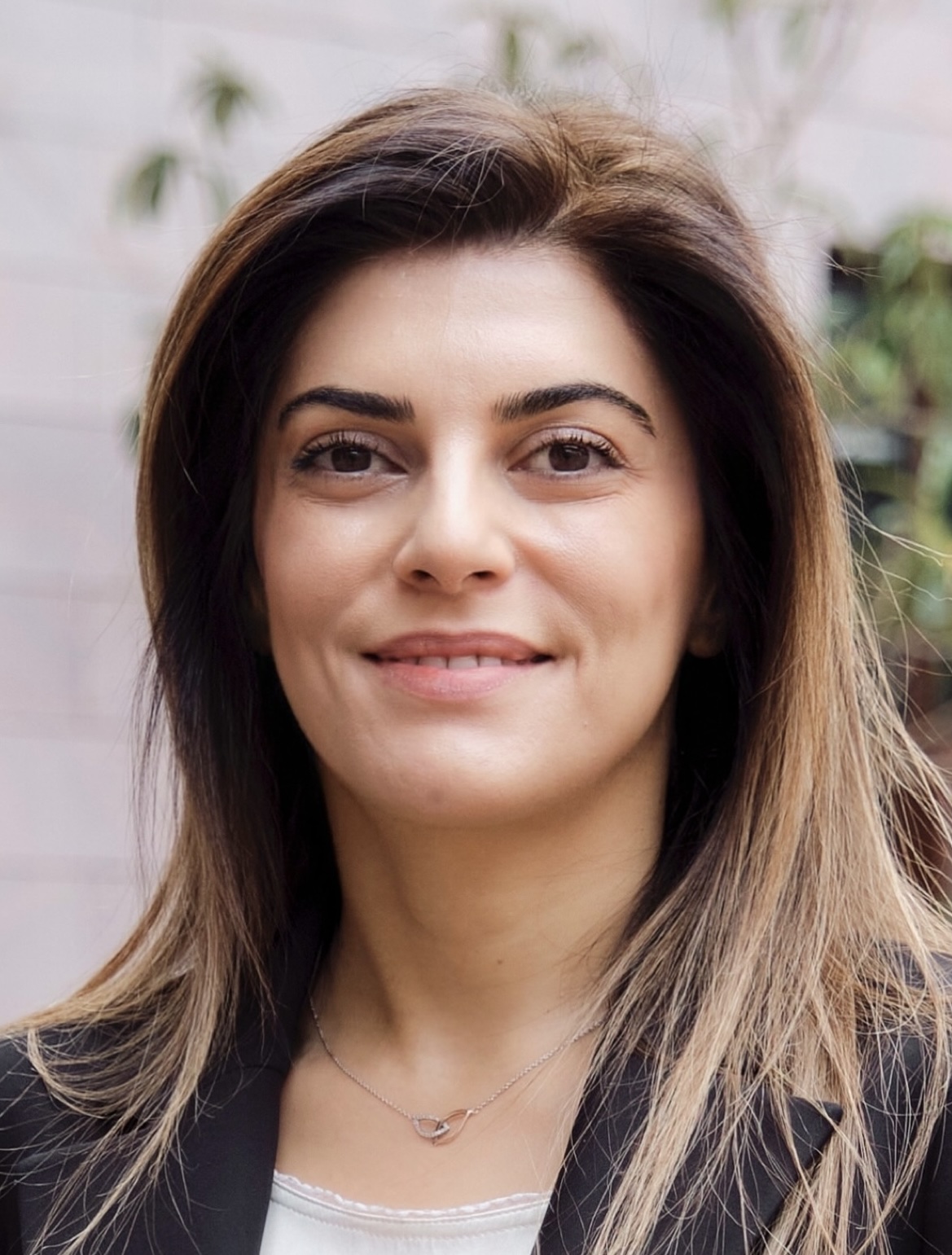
The fourth webinar will feature Professor Sinem Çöleri, the founding director of Wireless Networks Laboratory (WNL) and director of Ford Otosan Automotive Technologies Laboratory. The event will take place online via Zoom on 8 September at 4 p.m. Rome time, in a 40-minute lecture format, followed by a 20-minute Q&A session. Register here.
Abstract
Future wireless networks are undergoing a fundamental paradigm shift from connecting humans and machines to enabling the real-time control of complex physical systems. While 5G enabled massive machine-type communications and large-scale data acquisition, 6G is expected to transform this data into actionable intelligence for applications such as UAV swarms, collaborative robots, and cooperative autonomous vehicles.
This evolution requires communication systems to move beyond conventional throughput and latency objectives toward goal-oriented, semantics-aware, and ultra-reliable control, where even rare communication failures can have severe consequences. This talk presents a unified perspective on explainable and robust AI as a key enabler of control-centric 6G networks.
First, we combine extreme value theory with generative AI to model, learn, and predict rare but critical events, enabling reliability characterization beyond average-case performance and supporting ultra-reliable communications. Second, we develop optimization-theoretic AI approaches for robust and safe radio resource management in wireless networked control systems.
By exploiting problem structure and incorporating safety constraints into learning and optimization, these methods bridge the gap between data-driven intelligence and control-theoretic guarantees. Third, we explore the role of explainable AI in enhancing robustness, interpretability, and trust in safety-critical wireless systems by making AI-driven decisions more transparent and verifiable. Overall, the talk highlights how the integration of extreme value theory, generative AI, optimization, and explainable AI can enable the transition from connectivity-centric networks toward intelligent, trustworthy, and controllable 6G systems.
Who is Sinem Çöleri
Sinem Çöleri is a professor in the Department of Electrical and Electronics Engineering at Koc University (KU), Istanbul, Türkiye. She is also the founding director of Wireless Networks Laboratory, and director of Ford Otosan Automotive Technologies Laboratory. Çöleri received her BS degree in electrical and electronics engineering from Bilkent University in 2000, her Master of Science and PhD in electrical engineering and computer sciences from University of California Berkeley, in 2002 and 2005 respectively.
She worked as a research scientist in Wireless Sensor Networks Berkeley Lab under sponsorship of Pirelli and Telecom Italia, from 2006 to 2009. Since September 2009, she has been a faculty member in the department of Electrical and Electronics Engineering at KU. Her research interests are in 6G wireless communications and networking, AI-based wireless networks, machine-to-machine communications, wireless networked control systems and vehicular networks.
Çöleri has over 150 publications with more than 13,000 citations on Google scholar profile. She has received numerous awards and recognitions, including TÜBITAK (The Scientific and Technological Research Council of Türkiye) Science Award, N2Women: Stars in Computer Networking and Communications, TÜBITAK Incentive Award, IEEE Vehicular Technology Society Neal Shepherd Memorial Best Propagation Paper Award, Outstanding Achievement Award by Higher Education Council, and Turkish Academy of Sciences Distinguished Young Scientist (TUBA-GEBIP) Award.
Çöleri currently holds the position of editor-in-chief at the Institute of Electrical and Electronics Engineers (IEEE) Open Journal of the Communications Society, is an IEEE Fellow, and an Asia-Pacific Artificial Intelligence Association Fellow.